
Know the plant.
Skip the noise.
No jargon, no mythology, no pressure. Just what you need to choose well — first visit or five-hundredth.
Six chapters.
Read one, read all.
Written to be skimmed at the counter or read on the train. Nothing here is a sales pitch.
the law
What New York allows, where it applies, and the one rule with no nuance.
readyour visit
What happens between the sidewalk and the door at 122 E 25th.
readthe ask
How to talk to a budtender so you leave with the right thing.
readthe formats
Flower, pre-rolls, vapes, edibles, concentrates, tinctures, topicals.
readthe label
Percentages, milligrams, batches, and which number actually matters.
readtaking care
Pace, storage, tolerance, setting — and the myths worth retiring.
readLegal, but not
lawless.
New York's adult-use market runs on a short list of rules. Here are the ones that touch you as a customer.
Twenty-one and over
Adult-use cannabis in New York is for adults 21 and older. No medical card, no prescription, no appointment — and no exceptions to the age, not for anyone.
Valid government ID, every time
Bring an unexpired, government-issued photo ID: a driver's license, a state ID card, a passport, or a military ID. Every guest is checked on every visit, regardless of how often we've seen you.
Buy from a licensed shop
Only licensed retailers sell tested, tracked, state-compliant product. A licensed dispensary posts its license in the store. If a shop can't show you one, that's your answer.
There are limits
New York sets limits on how much an adult may possess — currently up to three ounces of cannabis and up to twenty-four grams of concentrate. Our team keeps you inside them at checkout, so you never have to do the math.
Check the current limitsIt stays in New York
Cannabis remains federally illegal, which means it can't cross state lines, board a plane, or come with you onto federal property — even between two states where it's legal.
The rules can change
Regulations are still maturing. We keep this page current, but the New York State Office of Cannabis Management is always the final word.
Read the state's rulesLegal to buy
isn't legal anywhere.
The short version: in New York, smoking cannabis generally follows the same rules as smoking tobacco — plus a few places where it is never permitted.
| Where | Where it stands | Worth knowing |
|---|---|---|
| Private home | Generally the simplest place to consume. | If you rent, your lease or building policy may say otherwise. Landlords and co-op boards can set their own smoking rules. |
| Sidewalks & streets | Smoking is broadly treated like tobacco smoking. | “Like tobacco” still means not in a doorway, not near a school entrance, and not where any local ordinance bans smoking. |
| Parks, beaches & pedestrian plazas | Not permitted in New York City. | The city's smoke-free parks rules apply to cannabis too. Bryant Park, Madison Square Park, the High Line — all off-limits. |
| Indoor public spaces | Not permitted. | Restaurants, bars, offices, lobbies, gyms, hotels, the subway and its platforms all fall under indoor clean-air rules. |
| A car — moving or parked | Never. | Consuming in a vehicle is prohibited for drivers and passengers alike. Keep product sealed and out of reach while you travel. |
| Federal property | Never. | Post offices, federal buildings, national parks, airports and airplanes remain under federal law. |
| Our shop | Not permitted on the premises. | Licensed retail and on-site consumption are different licenses. We're a retail shop — come in, choose well, enjoy it elsewhere. |
Everything on this page has nuance. This does not.Never drive high
From the sidewalk
to the shelf.
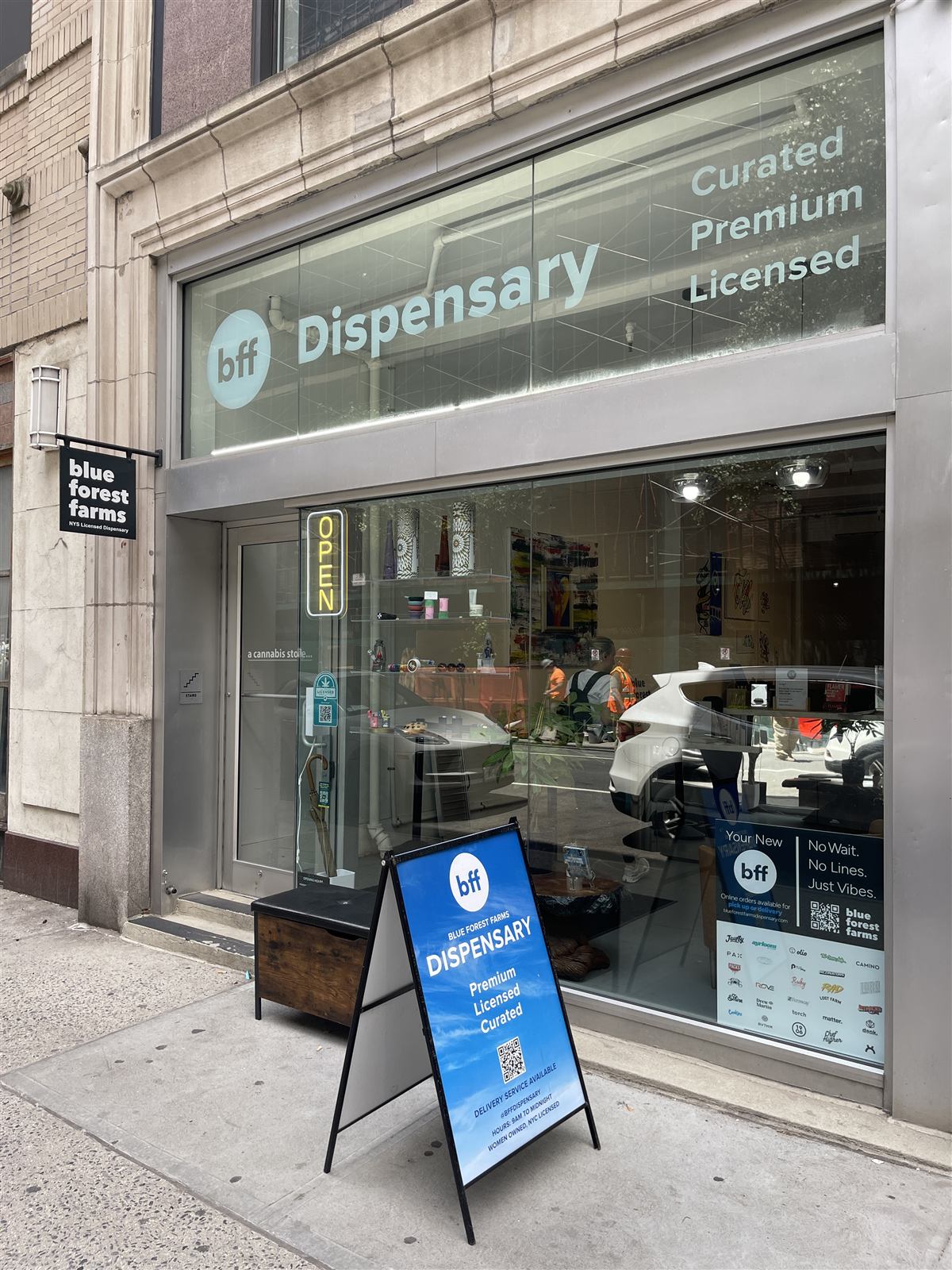
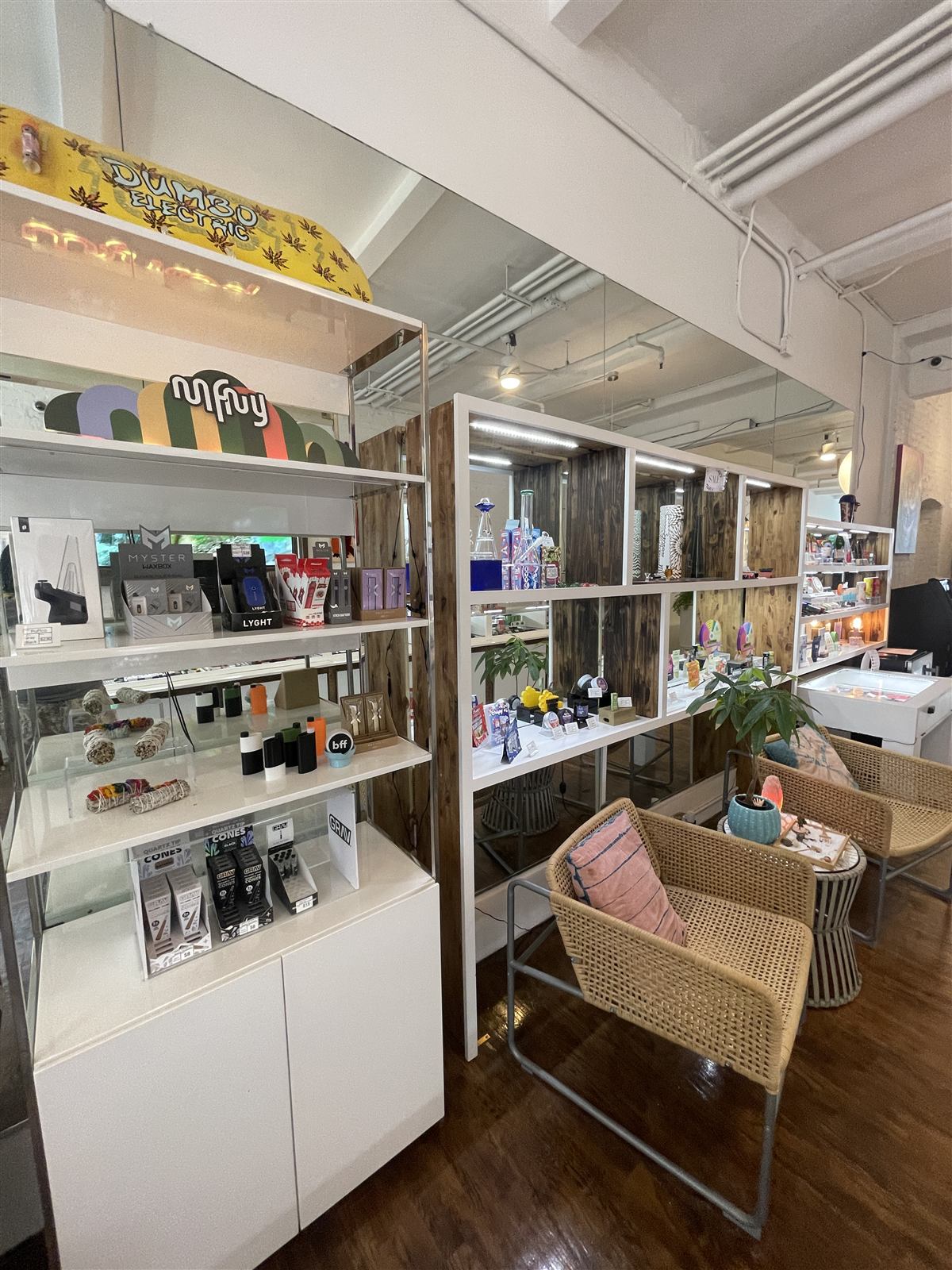
If you've never walked into a dispensary, here is exactly what happens at 122 E 25th Street. No surprises, no ceremony.
-
01
You arrive. We're on East 25th between Park and Lexington, in NoMad. Open daily, 9:00 AM to midnight — so there is no wrong hour to come by. The block is quiet; the door is not hard to find.
-
02
You show ID. Have it out before you reach the counter — it moves everyone along. We check every guest, every visit, without exception. It is the least interesting part of the day and it takes ten seconds.
-
03
You look around. Nobody follows you. Browse the cases at your own pace, read what you like, and decide whether you want help or want to be left alone. Both are completely normal.
-
04
You talk to someone. Tell a budtender what you're after and how experienced you are. Expect two or three honest suggestions, not the whole wall — a curated shelf exists so the conversation can be short.
-
05
You check out. Cash, debit and ACH bank payments are all accepted, and there's an ATM on site if you need it. Everything leaves in child-resistant packaging with the label intact.
-
06
You go home and go slow. Read the label before you open anything. Take less than you think you need the first time. You can always have more later; you cannot have less.
An unexpired photo ID
Driver's license, state ID, passport or military ID. A photo of your ID on your phone is not an ID.A rough idea, not a plan
“Something for a dinner party,” “something that isn't smoke,” “I haven't done this since college.” That's plenty to work with.The pressure to sound expert
Nobody here is impressed by vocabulary. Say what you actually want and you'll get further, faster.One address.
Two doors.
It confuses first-timers, so let's clear it up on the way in.

Two licenses,
one building.
CBD and adult-use cannabis are regulated differently in New York, so they live in different rooms. Same address, same people, different rules at the threshold.
Blue Forest Farms
CBD Studio
Our original line, grown from Colorado hemp roots since 2017. The 21+ ID check applies at the adult-use door behind it.
Visit the studioBFF Dispensary
Adult-use, 21+
The licensed adult-use room. ID out, 21 and over, every single visit. This is where everything else on this page applies.
See the menuTell us how you
want to feel.
Not what you think you should ask for. The single most useful sentence you can offer starts with “I want an evening that feels…”
A good answer starts
with a good brief.
Budtenders are not mind readers. Give them four pieces of information and the shelf narrows to two or three options.
Your experience level
“First time,” “a few times a year,” “most weekends.” This one changes every recommendation that follows it, so lead with it. There is no wrong answer and nobody is keeping score.
The occasion
A dinner with friends, a Sunday alone with a record, a long flight home tomorrow that you'd rather not be foggy for. Context does more work than any product description.
Your format preference
Smoke or no smoke is the fastest fork in the road. If you don't want to smell like anything afterwards, say so — it rules out half the shop in one sentence.
What went wrong before
“I once had an edible that was far too much” is genuinely useful information. Past experiences shape the recommendation more than any preference you could list.

There is no question we haven't heardJust ask
Same plant.
Seven different nights.
Format changes the experience more than almost anything else on the label. Start here, then read the section that sounds like you.
| Format | How it's taken | The character of it |
|---|---|---|
| Flower | Ground and smoked, or used in a dry herb vaporizer. | The most ritual. Aroma-forward, hands-on, and easy to take in small steps. |
| Pre-rolls | Rolled for you, ready to light. | Flower without the admin. Easy to share, easy to put out and come back to. |
| Vapes | Concentrated oil heated in a pen or cartridge. | The discreet one. Little smell, pocket-sized, no accessories to carry. |
| Edibles | Eaten or drunk, then digested. | The patient one. Slowest to arrive, longest to stay, easiest to overdo. |
| Concentrates | Vaporised with a purpose-built device. | The strong one. Flavor-obsessive and unforgiving of a heavy hand. |
| Tinctures | Measured by dropper, held under the tongue or added to food. | The precise one. Milligram control without smoke or a device. |
| Topicals | Applied to the skin — balms, oils, lotions. | The one that stays put. Most are not intended to produce a high at all. |
Flower &
pre-rolls.
The oldest format and the most forgiving. You can see it, smell it, and take exactly as much as you meant to.
Flower is the dried, cured bud of the cannabis plant, sold loose by weight. You grind it and smoke it, or warm it in a dry herb vaporizer, which produces vapor rather than smoke. Because it arrives quickly and tapers, it is the easiest format to learn your own limit with — one small step, a pause, then a decision.
A pre-roll is that same flower, rolled and ready. It removes every barrier to entry and adds one temptation: a pre-roll is a serving suggestion, not an instruction. Nobody is required to finish one. Put it out, let it wait, come back to it if you want to.
What separates one flower from another is rarely the number on the jar. It's the aroma, the cure, the way it burns, and how the shop treats it before it reaches you. Ask to smell what's fresh — that is a completely normal request.



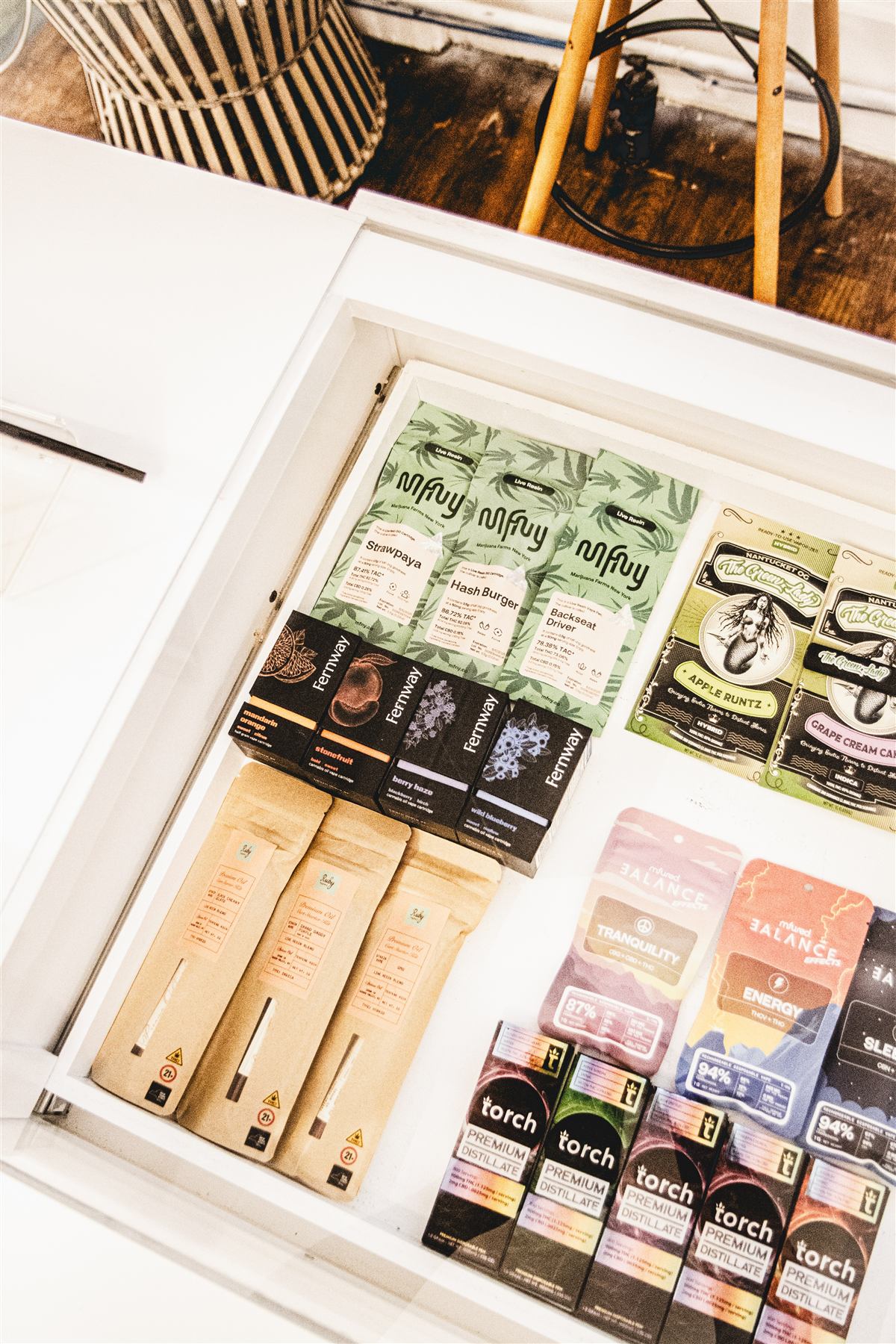
Vapes.
The quiet one.
Concentrated cannabis oil, heated rather than burned, in something the size of a pen. If discretion matters, this is where the conversation usually lands.
There are two shapes on the shelf. An all-in-one is a sealed, disposable device — nothing to charge, nothing to assemble, nothing to think about. A cartridge screws onto a reusable battery you keep, which costs less over time and lets you switch between oils.
Vapes arrive quickly, which makes them easy to pace: one short draw, then wait before deciding on another. That immediacy is also the trap. Because there is no ritual and no ash, it is easy to keep going absent-mindedly. Put it down between draws and let it stay down.
Practical notes: keep the device upright and out of a hot car, charge the battery before you need it, and buy only from a licensed shop — the supply chain is the entire point.
See what's in stockEdibles.
The patient one.
Everything you have heard about edibles going wrong comes down to a single mistake: taking a second one before the first one arrived.
An edible has to be digested before anything happens, so it is by far the slowest format to be felt — and once it does arrive, it stays considerably longer than an inhaled format. There is no rushing this and no shortcut. Take a small serving, then leave the packet in another room and get on with your evening.
Edibles are also the easiest format to measure honestly, because they are labeled in milligrams per serving rather than as a percentage. A gummy scored into halves is a real dosing tool. Cutting one is not being cautious; it is using the product as designed.
How you take it changes the arc, too. On an empty stomach it can feel different than after dinner, and it can differ between two evenings for the same person. Treat every new product as a fresh introduction, even if you have been doing this for years.
Browse edibles

Concentrates.
The deep end.
Cannabis with most of the plant material removed. Far more potent than flower, gram for gram, and best approached with a tolerance you already understand.
You'll see several textures on the shelf — some soft and buttery, some glassy, some crumbling — and several extraction methods behind them, including solventless ones made with nothing but heat, pressure, ice and water. The texture tells you about consistency and handling, not about strength.
Concentrates are vaporised with purpose-built equipment, and temperature is the whole craft. Lower temperatures favour aroma and flavor; higher ones are harsher and lose the nuance you paid for. Enthusiasts choose this format for terpene expression as much as anything else.
If you're new, this is not the place to begin. If you're experienced, the honest guidance is unchanged and simply matters more here: an amount that looks trivially small is the correct starting point.
Browse concentratesTinctures &
topicals.
The two formats people forget exist, and the two that suit a lot of people best.

Neither one involves smoke, a lighter, or a device to charge. Both are measured rather than estimated. If the whole apparatus of cannabis is what has kept you away, start here.
Measured by the drop
A liquid, usually oil-based, taken with a marked dropper. Held under the tongue it behaves one way; stirred into food or a drink it behaves more like an edible and takes its time.
The appeal is precision. The dropper is graduated, the label states milligrams, and small adjustments are genuinely possible — which is why cautious first-timers and long-time regulars both end up here.
Balms, oils, lotions
Applied to the skin and used where you put them. The great majority of topicals are not intended to produce a high at all, which makes them the one category that doesn't ask you to change your plans for the day.
Transdermal patches are the exception — they are designed to pass through the skin and behave quite differently. If you're looking at one, ask a budtender to walk you through it first.
Availability of every format varies week to week. The live menu is the only accurate source. Check today's menu
The numbers,
decoded.
Licensed product carries a lot of information in a small space. Here's what each part is telling you — and which part most people over-weight.
| On the label | What it means | How to use it |
|---|---|---|
| THC % | The proportion of the product, by weight, that is THC. You'll see this on flower and concentrates. | A percentage is not a dose. It tells you how concentrated the material is, not how much you are about to take — that part is up to you. |
| mg per serving | Milligrams of THC in one defined serving — one gummy, one dropper, one piece. | This is the number that actually governs your evening with edibles and tinctures. Read it before you open the packet, not after. |
| mg per package | The total in the whole container, across every serving inside it. | Easy to mistake for a serving. Always divide: total milligrams divided by number of servings gives you the number that matters. |
| CBD & minor cannabinoids | Other compounds present, such as CBD, CBG or CBN, listed alongside THC. | Two products with the same THC figure can be composed very differently. If a budtender asks about ratios, this is what they mean. |
| Batch or lot number | Ties this exact package to a specific production run and its laboratory testing. | Your receipt for accountability. If you loved something — or didn't — note the batch, not just the name. |
| Lab test results | Licensed product is tested by an independent laboratory before it may be sold. | Testing is the entire difference between the licensed and unlicensed market. Ask to see results; a good shop will show you. |
| Packaged or harvest date | When the product was packed or the flower was harvested. | Cannabis is agricultural. Fresher flower generally smells and burns better. Old stock on a shelf is a fair question to ask about. |
| Warnings & the state symbol | Required cautionary language and New York's cannabis product symbol. | Their presence is a quick visual check that what you're holding came through the regulated market. |
Indica, sativa, hybrid —
a rough guide.
These three words have done more work in cannabis retail than any others, and they are far less precise than the industry pretends. Here's the honest version.
indica
Traditionally used as shorthand for evening, unwinding, staying in. Originally a botanical description of plant shape, not of how something would feel.
sativa
Shorthand for daytime, conversation, going out. Again, originally about how the plant grows — tall and narrow-leaved — rather than any promised experience.
hybrid
A cross between the two, which in practice describes nearly everything grown commercially today. The label alone tells you very little.
Decades of cross-breeding mean these categories no longer map cleanly onto anything you can predict. Two flowers labeled the same way can be composed differently and can be experienced differently by two people in the same room.
Treat the three words as a starting point for a conversation, not as a specification. The more useful questions are about the aroma, the cannabinoid mix on the label, and what your own past experience has been.
Terpenes are
the fingerprint.
Aromatic compounds found across the plant world — in citrus peel, in pine needles, in lavender — and in cannabis. They are the reason two jars with near-identical labels smell nothing alike.

Limonene
Bright citrus peel — lemon, orange, grapefruit. Also what you smell when you zest a lemon.
Myrcene
Earthy and herbal with a ripe-fruit edge. Found in hops, mango and thyme.
Pinene
Exactly what it sounds like: pine needles, rosemary, fresh forest air.
Linalool
Floral and soft — the lavender note, also present in coriander and birch.
Caryophyllene
Warm and peppery. The same compound that gives black pepper and cloves their bite.
Terpinolene
Fresh and complex — green apple, nutmeg, cut herbs. Often the one people can't quite place.
A note on honesty: terpene profiles describe aroma and flavor. You will see claims elsewhere that a given terpene guarantees a given feeling — the science is not settled, and we won't pretend otherwise. Shop by what smells good to you. That is a legitimate way to choose.
How long until,
and how long for.
We won't give you minute counts, because they vary enormously between people, products and days. What's reliable is the shape of each format — and the shape is what you plan around.
| Format | Arrival | The arc |
|---|---|---|
| Flower & pre-rolls | Among the quickest. | Comes on, plateaus, tapers. The short arc is exactly why it's the best format for learning your own limit. |
| Vapes | Similar to flower. | Quick to arrive and quick to fade — which is why absent-minded repeat draws are the thing to watch for. |
| Concentrates | Fast, and considerably stronger. | The same short arc as inhaled flower, at a scale that punishes a heavy hand. Smallest possible amount, always. |
| Edibles | The slowest by a wide margin. | Long, gradual, and the longest-lasting of any format. Plan the whole evening around it, not the next half hour. |
| Tinctures under the tongue | Faster than swallowing one. | Sits between inhaling and eating. Hold it as directed on the label — swallowing it immediately changes the behavior. |
| Tinctures in food or drink | Slow — treat it as an edible. | Once it's stirred into something, digestion takes over and the edible rules apply in full. |
| Topicals | Used on the skin, where you apply them. | Most are not intended to produce a high. Transdermal patches are the exception and behave differently — ask before you use one. |
The single most common mistake in cannabis is redosing during the wait. If you are unsure whether anything is happening, the answer is to wait longer — never to take more.
Start low.
Go slow.
Four ideas that do more for the quality of an experience than any product choice you could make.
Take less than you think
Begin below where you assume you should be, and give it real time before deciding anything. You can always add more later in the evening. You cannot take any of it back.
Tolerance is personal and it moves
What suits a regular consumer can be far too much for someone returning after years away. Tolerance also drifts with frequency — the amount that was routine last season may not be right this one.
Set and setting are not woo
Where you are, who you're with and how the day has gone shape the experience as much as the product does. A familiar room and good company are genuinely part of the decision.
Mixing changes everything
Alcohol alongside cannabis is a different proposition entirely, and a common cause of an evening going sideways. If you're combining, be significantly more conservative than usual.

Uncomfortable
is not an emergency.
Taking more than you intended can feel genuinely unpleasant, and it passes. Find somewhere quiet and familiar, sit down, drink some water, and tell whoever you're with what's happening.
Time is the thing that helps, and there is no way to hurry it. If you are ever seriously worried about yourself or someone else, call a medical professional — that is what they're there for.
Where it lives
when you're not using it.
Two jobs: keep the product good, and keep it away from anyone it isn't for.
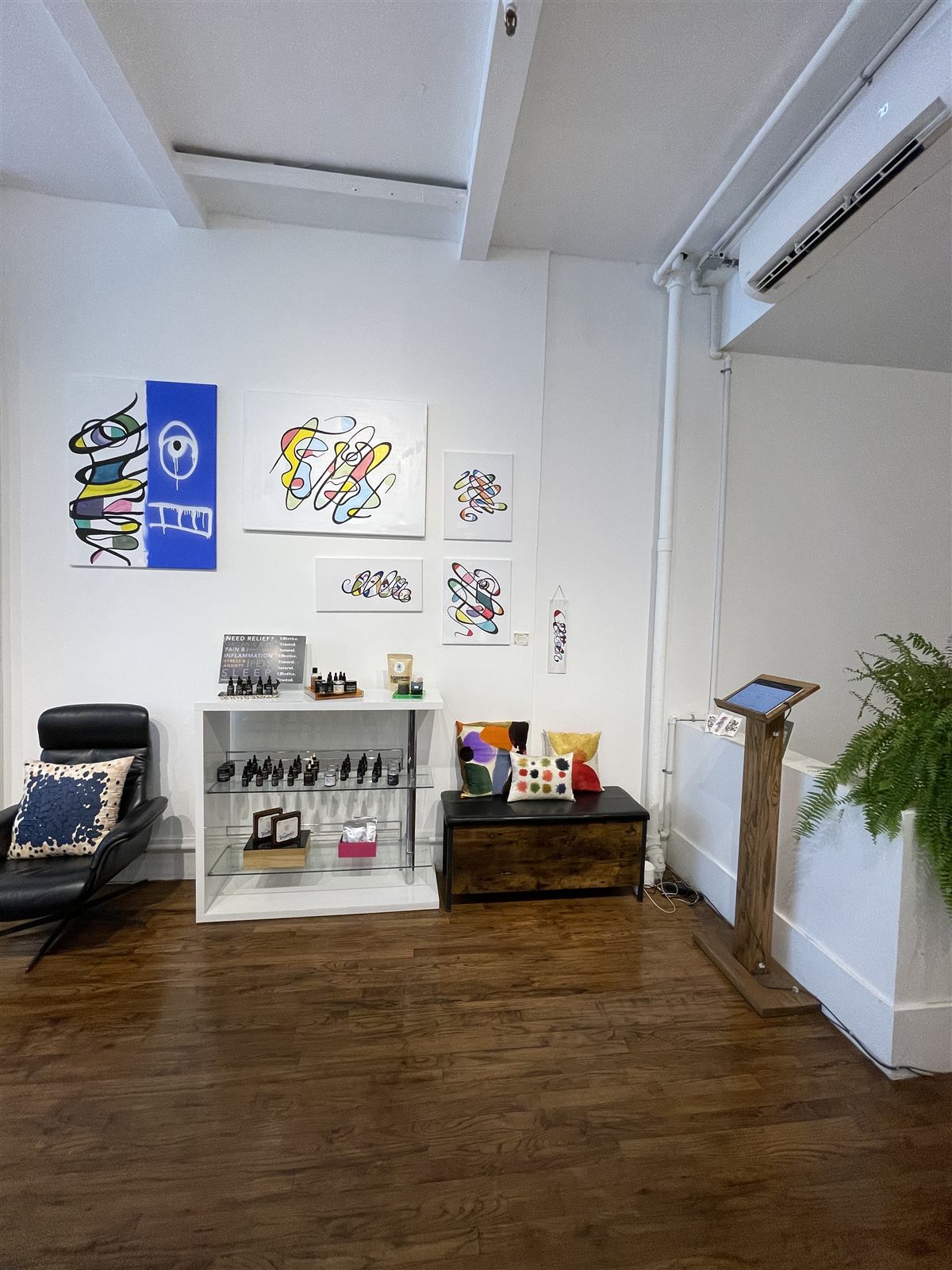
Every product leaves our shop in child-resistant packaging with the label attached. Both of those things exist for a reason — keep the product in the packaging it came in, and keep the label with it.
Locked, high, out of sight
Children and pets are the whole reason to be strict about this. A locking box or a high shelf behind a closed door, always — and never a kitchen counter, a coffee table, or a bag left open on the floor.
Cool, dark and dry
Heat, light and air are what degrade cannabis. A cupboard away from the stove and the window will preserve aroma far longer than a sunny shelf. Never leave anything in a parked car.
Keep the original packaging
It is child-resistant, it is opaque for a reason, and it carries the label — batch number, contents, warnings. Decanting into an unmarked jar throws away everything you'd want to know later.
Edibles do not belong in the snack drawer
Anything that looks like ordinary food needs to be stored somewhere ordinary food is not. This is the single most common way a household accident happens; it is also the easiest one to prevent.
Travel sealed and out of reach
In a vehicle, product stays sealed and out of the passenger area. It cannot cross state lines, and it cannot come to an airport — those are federal spaces regardless of New York law.
Pets are not small people
Animals are considerably more sensitive than we are, and they will eat something that smells interesting. If a pet gets into anything, call a veterinarian straight away.
Myths,
and what's true.
Every one of these gets said at our counter most weeks. None of them holds up.
“Higher THC means a better product.”
Potency is one variable among many, and it is the one most often mistaken for quality. The cure, the freshness, the aroma, the full cannabinoid mix and — above all — how much you actually take will shape your evening far more than the number printed on the jar. Chasing the highest percentage on the shelf is how most people end up with something they don't enjoy.
“Indica always means sleepy, sativa always means energetic.”
A useful shorthand that decades of cross-breeding have worn thin. The words began as botanical descriptions of how the plant grows, not as predictions of how it would be experienced. Two products carrying the same label can be composed very differently. Use the terms to open a conversation, not to close one.
“It isn't working, so I should take more.”
This is the most consequential mistake on the list, and it is almost entirely an edibles problem. Digestion takes as long as it takes, and impatience during that wait is what turns a pleasant evening into an unpleasant one. If you are unsure whether anything is happening, wait longer. Waiting has never made an evening worse.
“An edible is about the same as smoking.”
Different formats behave differently enough that experience with one tells you surprisingly little about the other. Someone entirely comfortable with flower can be caught out by an edible, because the arrival is slower and the arc is much longer. Approach each format as its own thing, no matter how experienced you are.
“It's legal in New York, so I can smoke it anywhere.”
Legal to buy is not legal everywhere. Smoking is broadly treated like tobacco smoking, which rules out indoor public spaces, the subway, and every city park and beach. Vehicles are prohibited outright, for passengers as well as drivers, and federal property remains under federal law.
“Everything on sale in the city is licensed.”
It is not, and the difference is not cosmetic. Licensed product is laboratory-tested, tracked, correctly labeled and sold by staff trained to check ID. A licensed shop posts its license where you can see it. If you cannot find one on the wall, you are not in a licensed dispensary.
“You can sober up quickly with coffee or a cold shower.”
There is no reliable way to speed this up. Coffee, a shower and fresh air may make you feel more occupied, but the only thing that genuinely works is time. Plan for that in advance rather than looking for an exit halfway through.
“A tolerance break resets everything.”
Tolerance does shift with frequency, but not on a schedule anyone can promise you, and it varies person to person. Treat any return after a break the way you'd treat a first time: start well below where you left off, and let the evening tell you the rest.
Words you'll hear
at the counter.
You never need to use any of these to shop here. But it's nice to know what's being said.
| Term | What it means |
|---|---|
| Adult-use | The legal category for cannabis sold to adults 21 and over without a medical recommendation. Sometimes called recreational. |
| Budtender | The person behind the counter. Their job is to translate what you want into what's on the shelf — not to sell you the most expensive thing in the case. |
| Cannabinoid | One of the plant's characteristic compounds. THC and CBD are the two you'll see most; CBG and CBN appear in smaller amounts. |
| THC | The primary intoxicating compound in cannabis — the source of the high. |
| CBD | A non-intoxicating cannabinoid, and the foundation of our sister studio's line since 2017. Often present alongside THC in a labeled ratio. |
| Terpene | An aromatic compound found throughout the plant world. Terpenes are why cannabis smells of citrus, pine, pepper or lavender. |
| Cultivar | The botanically correct word for what most people call a strain — a specific cultivated variety with a name. |
| Batch or lot | A single production run, tied to its own laboratory testing. The number on your package points back to it. |
| Certificate of analysis | The laboratory report for a batch, usually shortened to COA. It's reasonable to ask to see one. |
| Serving | One defined portion as the manufacturer intended it — one gummy, one dropper, one piece. Not the same as the package. |
| Pre-roll | Flower already ground and rolled, ready to light. A serving suggestion, not an obligation to finish. |
| Concentrate | Cannabis with most plant material removed, leaving a much more potent material. Sold in several textures. |
| Solventless | An extraction approach using only heat, pressure, ice and water rather than chemical solvents. |
| Tincture | A liquid taken by dropper, either under the tongue or added to food and drink. |
| Topical | A balm, oil or lotion applied to the skin. Most are not intended to produce a high. |
| Entourage effect | An industry term for the idea that cannabis compounds interact rather than acting alone. Widely repeated, not settled science — treat it as a hypothesis. |
| Tolerance | How your own response shifts with frequency of use. Personal, changeable, and not comparable between two people. |
| OCM | The New York State Office of Cannabis Management — the agency that licenses and regulates every legal shop in the state, including this one. |
Now come
choose something.
Browse the live menu before you come in, or walk up to 122 E 25th and let someone talk you through it. Rated 4.9 from 695 reviews on Google — we think that's the staff.
Open daily, 9:00 AM – midnight · 122 E 25th St, New York, NY 10010 · Online ordering, curbside pickup and delivery available.
Find us & get in touch
flower
Read chapter four, then browse the jars.
shop flowerpre-rolls
Flower without the admin.
shop pre-rollsedibles
Milligrams on the label. Patience in the plan.
shop ediblesconcentrates
For the experienced hand.
shop concentratescbd
Non-intoxicating, and where we started in 2017.
shop cbdeverything
The whole live menu, updated as stock moves.
shop allEnjoy it well.
Nothing on this page is medical advice, and nothing on it is a promise about how anything will make you feel.
For adults 21 and over
Valid, unexpired government-issued photo ID is required for every purchase, on every visit, without exception.
Never drive impaired
Do not drive or operate machinery under the influence of cannabis. It can impair concentration, coordination and judgment.
Keep it away from children & pets
Store everything locked, out of sight and out of reach, in its original child-resistant packaging.
This is not medical advice
We make no health claims about any product. There may be health risks associated with consuming cannabis; consult a physician with any questions, especially if you are pregnant or breastfeeding.
Licensed by New York State
Blue Forest Farms Dispensary is a licensed adult-use retailer regulated by the New York State Office of Cannabis Management, and our license (No. OCM-RETL-24-00016) is displayed in store.
The state's guidanceWritten to be useful, not exhaustive
Regulations change and this page is a general guide, not legal advice. When in doubt, the Office of Cannabis Management is the authority — and our staff are happy to point you there.